“Analog IC Design” Online Course (2026)
Interview with Prof. Seung-Tak Ryu (KAIST)
Preview – “Analog IC Design” Online Course (2026)
Sample Lecture – “Analog IC Design” Online Course (2026)
Sample Homework – “Analog IC Design” Online Course (2026)
Great analog designers are known for their intuition — the ability to predict circuit behaviour, make smart trade-offs, and identify issues before they appear. Intuition comes from a deep grasp of fundamentals, not from brute-force simulations. Among analog building blocks, the operational amplifier (opamp) stands as the most representative example, encompassing nearly all essential design challenges, including gain, bandwidth, feedback, stability, frequency and transient response, noise, and matching.
This course focuses on building intuitive understanding, giving engineers the insight and confidence to design, analyse, and optimize analog circuits with clarity and efficiency. It offers a structured, practical exploration of analog IC design centred around operational amplifiers, covering core opamp principles and advancing to sophisticated switched-capacitor (SC) circuit techniques. Practical design projects are integrated throughout, allowing participants to apply theory directly to real-world analog circuit implementations.
The course begins by exploring fundamental opamp architectures, focusing on telescopic and folded-cascode amplifiers. Key topics include DC gain, input/output common-mode range (CMR), biasing strategies for wide CMR, and common-mode feedback (CMFB) in fully-differential designs. Essential frequency response aspects such as bandwidth and stability are also covered.
Next, participants explore two-stage opamp architectures and examine how Miller compensation techniques influence frequency response to ensure stability. The course also introduces the concept of unwanted positive zero and methods to mitigate its impact.
The focus then shifts to transient response, covering concepts such as linear settling and slew-rate limitations. This section also introduces output stage architectures, including the common-source configured class-AB design (Huijsing amplifier). The course then expands into advanced amplifier structures, discussing topics like gain boosting, nested Miller, and multipath approaches.
With this theoretical groundwork in place, hands-on design examples are introduced, including fully-differential folded-cascode and/or two-stage opamps. Participants will evaluate biasing, gain, stability of both the signal path and CMFB paths, transient behaviour, and testbench configuration.
After exploring continuous-time circuit design, the course progresses to discrete-time analog design, beginning with the principle of charge conservation in switched-capacitor (SC) networks. These lectures cover the operation of SC gain stages, sample-and-hold circuits, multiplying DACs (MDACs), SC integrators, and CMFB mechanisms in SC systems. The course also examines recent dynamic amplifier architectures, such as the Ring Amplifier (Ringamp) and Floating Inverter Amplifier (FIA), highlighting their design principles and emerging trends.
The course concludes with a second design project focused on switched-capacitor gain amplifiers. Flip-around and/or charge redistribution structures are explored in detail, including an analysis of loop gain, stability in both signal and CMFB paths, and settling behaviour.
To reinforce the material covered in each lecture, participants will have the option to complete homework assignments that extend their learning through practical application. These exercises may include SPICE simulations to explore circuit behaviour or analytical problems focused on design calculations. Engaging with these tasks helps deepen understanding and provides hands-on experience beyond the core lectures.
This course is tailored for engineers working in analog circuit design who want to deepen their expertise and cultivate strong intuitive skills, as well as for professionals seeking a broader understanding of data converter fundamentals. Focusing on practical applications, it empowers participants with the insight and confidence to tackle real-world analog circuit challenges.
All Lectures @ (22:00-00:00 Tokyo) = (14:00-16:00 Milan) = (13:00-15:00 Dublin) = (08:00-10:00 Boston) = (05:00-07:00 San Diego)
Lecture #1 – Opamp Fundamentals and Simple Opamps
DC Gain; Input/Output Common-Mode Ranges; Bias Circuits; Common-Mode Feedback (CMFB); AC Response; Stability; Noise.
Lecture #2 – Two-Stage Opamp and Miller Compensation
Miller Effect and Frequency Compensation; Positive Zero and Variations of Miller Compensation Technique; CMFB for Two-Stage Opamps.
Lecture #3 – Transient Response and Output Stage
Bandwidth and Settling Accuracy; Exponential Settling; Slew Rate; Class-AB Output Stage Design.
Lecture #4 – High-Gain Opamps
Gain-Boosting Amplifier; Nested Miller Compensation, Multi-Path Compensation.
Lecture #5 – Design Project #1: Fully-Differential Opamps
From-Specs-to-Sims; Step-by-Step Design and Simulation Methodology. Fully-Differential Folded-Cascode Opamp and/or Fully-Differential Two-Stage Opamp.
Lecture #6 – Switched-Capacitor Circuits: SC Amplifiers – Part I
Charge Conservation; SC Amp Structures; Sample-and-Holds; Multiplying DACs; SC Integrators; SC CMFB.
Lecture #7 – Switched-Capacitor Circuits: SC Amplifiers – Part II
Dynamic Amplifiers for SC Circuits; Inverter-based Amp; Ring Amplifier; Floating Inverter Amplifier; FIA Applications.
Lecture #8 – Design Project #2: Switched-Capacitor Gain Amps
From-Specs-to-Sims; Step-by-Step Design and Simulation Methodology; Fully-Differential Gain Amps with Flip-Around and/or Charge-Redistribution.
Duration: 16 hours
Format: 8 x 2-hour recorded lectures including interactive Q&A.
Work: Homework assignments (optional) will consolidate the learning from the lectures.
Included:
- Course notes (PDF)
- Homework assignments (PDF)
- Lecture recordings (8 weeks playback access)
- Course homepage
- Class discussion forum (offline Q&A)
- Recommended reading list
- Extra material

Seung-Tak Ryu received the M.S. and Ph.D. degrees in electrical engineering from Korea Advanced Institute of Science and Technology (KAIST), Daejeon, South Korea, in 1999 and 2004, respectively.
From 2001 to 2002, he was with the University of California, San Diego, CA, USA, as a Visiting Researcher. He began his professional career in 2004 with Samsung Electronics, Yongin, South Korea, where he worked on the development of mixed-signal IPs. From 2007 to 2009, he was an Assistant Professor with the Information and Communications University (ICU), Daejeon.
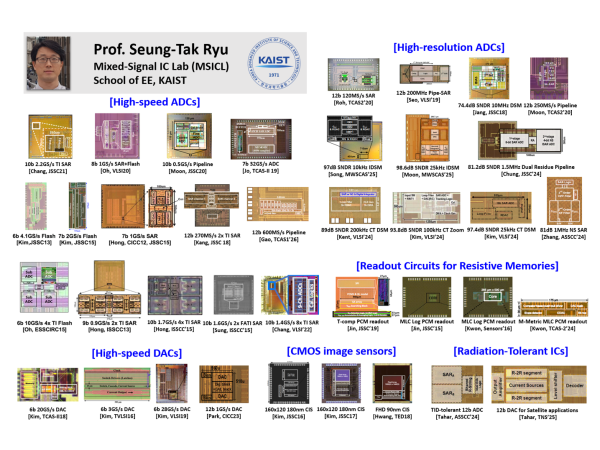
Since 2009, he has been a Faculty Member with the School of Electrical Engineering, KAIST, where he is currently a Professor. His research interests include analog and mixed-signal integrated circuit (IC) design, particularly in the areas of data converters and sensors.
Dr. Ryu is actively involved in the technical community. He is a member of the Technical Program Committees (TPC) for the IEEE International Solid-State Circuits Conference (ISSCC), the Asian Solid-State Circuits Conference (ASSCC), and European Solid-State Circuits Conference (ESSCIRC). He previously served on the TPC of the IEEE Custom Integrated Circuits Conference (CICC) as Chair of the Data Converter Subcommittee. He has twice served as a Guest Editor for the IEEE Journal of Solid-State Circuits (JSSC) and was an Associate Editor for the IEEE Solid-State Circuits Letters (SSCL) from 2018 to 2023. From 2021 to 2022, he served as a Distinguished Lecturer for the IEEE Solid-State Circuits Society. He currently serves as an Associate Editor for both the IEEE Open Journal of Circuits and Systems (OJ-CAS) and the IEEE Open Journal of the Solid-State Circuits Society (OJ-SSCS).
Publications
Publications (Selected)
[2025] A 0.38-mW 200-kHz-BW Digital-Intensive Single-Opamp Fourth-Order Continuous-Time Delta Sigma Modulator …
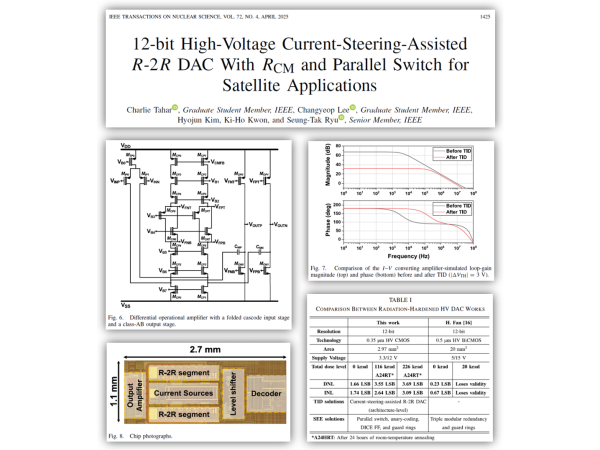
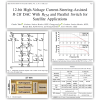
[2025] 12-bit High-Voltage Current-Steering-Assisted R-2R DAC With RCM and Parallel Switch for Satellite Applications
[2024] A 28nm CMOS 12-bit-600-MS/s 15.6mW Pipelined ADC with Two-Stage Gainboosting FIA-based RA
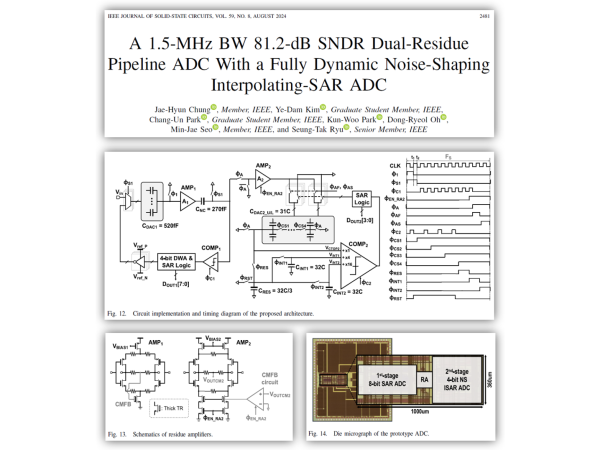
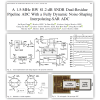
[2024] A 1.5-MHz BW 81.2-dB SNDR Dual-Residue Pipeline ADC With a Fully Dynamic Noise-Shaping Interpolating-SAR ADC
[2024] A 100kHz-BW 99dB-DR Continuous-Time Tracking-Zoom Incremental ADC with Residue-Gain Switching and Digital NC-FF
[2021] An Input-buffer Embedding Dual-residue Pipelined-SAR ADC with Nonbinary Capacitive Interpolation
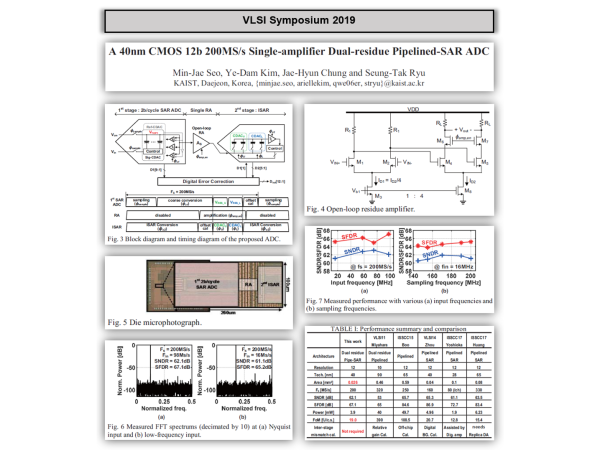
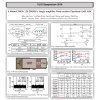
[2019] A 40nm CMOS 12b 200MS/s Single-amplifier Dual-residue Pipelined-SAR ADC
[2013] A Replica-Driving Technique for High Performance SC Circuits and Pipelined ADC Design
[2007] A 10-bit 50-MS/s Pipelined ADC With Opamp Current Reuse
[2004] A 14-b linear capacitor self-trimming pipelined ADC